
 By
By 
Before the notifications collect on her screen, she studies a quiet topography: a closet of familiar silhouettes, remembered textures, colors that have proved themselves across many mornings. Each outfit is a small map drafted for the hours ahead-a sleeve that suits the day’s reach, a fabric that agrees with the weather, a detail that answers an inner mood. In a market where trends move at the speed of a swipe, her choices keep the tempo of her own life. She is both author and audience, dressing for the person who will do the walking, the working, the waiting.
This is not a manifesto so much as a method. It is indeed the practice of charting an aesthetic by landmarks that matter privately: the jacket whose lining carries a story, the shoe that has learned her gait, the shade of green that feels like a place she recognizes. It is also a navigation through noise-past algorithmic suggestions and seasonal directives-using a compass calibrated to fit, function, and feeling.
This article traces that compass. It considers how a self-directed style emerges, how memory and utility braid with curiosity, and how consistency can coexist with change. It looks at dressing as a form of orientation rather than performance, a daily cartography that maps a life from the inside out.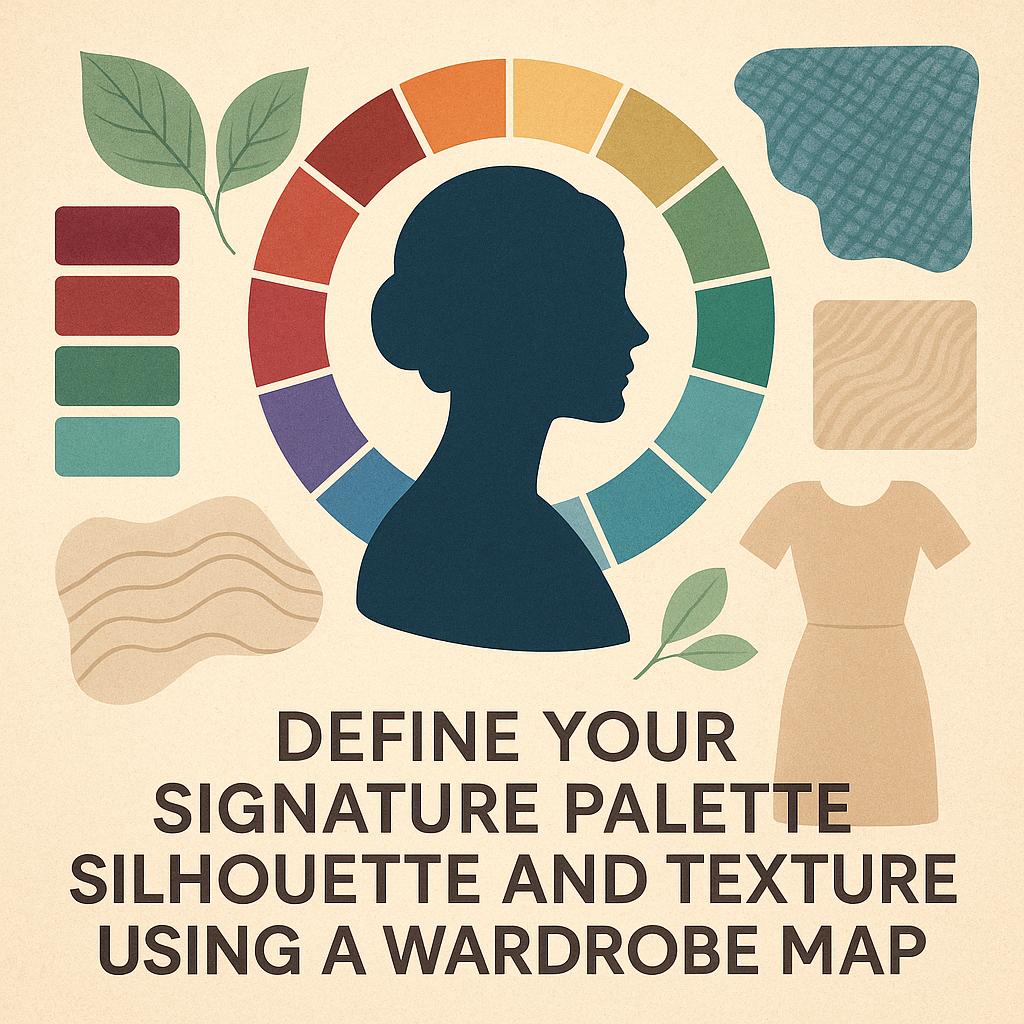
Define Your Signature Palette Silhouette And texture Using A Wardrobe Map
Sketch a simple wardrobe map: one axis for color energy (quiet to vivid), one for line (tailored to fluid), and one for surface feel (matte to lustrous). Plot what you actually wear, not what you admire on others-clusters show your default uniform, gaps suggest a fresh nudge. Give yourself constraints that feel like freedom: three trusty neutrals, two accents with purpose, one metal finish; two go-to outfit lines; a texture rule you can apply with eyes half-closed. The goal isn’t minimalism-it’s clarity. When the map is clear, shopping turns into editing, and every morning becomes a rapid alignment of color, line, and feel.
- color logic: choose 3 base neutrals (e.g., charcoal, stone, ink), 2 accents that shift mood (e.g.,rust for warmth,glacier for calm),and 1 metal (e.g., brushed silver) to unify hardware and jewelry.
- Line anchors: pick a long column (slim base, cropped topper), a soft A-line (ease at hip), and a relaxed drape (straight leg + fluid knit) as repeatable shapes.
- Texture rule: pair 1 plush with 1 crisp, keep shine level consistent (matte/mid/high), and let print scale match your hand width for balance.
Turn the map into a pocket guide you can glance at while packing, thrifting, or mixing old with new. Keep it alive-seasonal tweaks, fabric swaps, and proportion shifts belong here. Below is a compact sample you can adapt; it favors cool neutrals, warm accent heat, clean columns, and tactile contrast without noise.
| Map Node | Anchor Choice | Quick Test |
|---|---|---|
| Base Neutral | Charcoal | works with every shoe and bag I own |
| Accent 1 | Rust | Brightens face in daylight; no extra makeup needed |
| Accent 2 | Glacier Blue | Soft contrast with charcoal; calming, not icy |
| Silhouette | Column + Cropped Topper | Long leg line; waist suggestion, not squeeze |
| Texture Pair | Brushed Wool + Matte Leather | 1 plush + 1 crisp; no squeak, no glare |
| Print Rule | Small Geometric | One print per look; scale = palm width or smaller |
| Metal | Brushed Silver | Matches zips, buckles, hoops; no mixed signals |
Shop With Criteria Fit Fabric Care And Cost Per Wear To Build Longevity
She buys for the life she actually lives, letting silhouette and substance share the decision. fit comes first: shoulders that align without strain, a waistband that anchors rather than argues, rises and lengths that meet her stride. She checks seam allowances for future tweaks,looks for lined fronts where it matters,and favors closures that lie flat. Then fabric proves its case-fiber content, weave, and weight tell her how a piece will drape, breathe, and age; she tests for recovery with a gentle stretch, rubs a discreet spot for pilling, and holds it to light to gauge density and sheen. beauty is invited, but construction earns the RSVP.
- proportion: Hem hits at the right thirds; sleeves graze the wrist bone, not the keyboard.
- Ease & movement: Sit, reach, twist; nothing bites, gapes, or buckles.
- Tailorability: Extra seam allowance, real hems, set-in waistbands.
- Fiber & weave: Wool twill for structure,cotton poplin for crispness,silk crepe for fluidity.
- Hand & drape: Soft without sag, smooth without shine-overload.
- Durability signs: Tight stitching, reinforced stress points, colorfast finish.
Maintenance is part of design: she reads care labels like contracts, choosing fabrics whose upkeep fits her routine-machine-washable wool blends, silks she’ll actually steam, denims that tolerate wear without constant washing. She considers the hidden costs-cleaning fees, time, energy-and balances them against expected mileage. A simple yardstick keeps her honest: Cost per wear = Price ÷ Expected wears.She projects wears by season and role-office, weekend, occasion-so a higher upfront price can win if it’s a frequent reach. When a piece promises longevity, she supports it with rotation, spot care, and proper storage so the last wear feels as considered as the first.
| Item | Price | Planned Wears | CPW |
|---|---|---|---|
| Wool blazer | $240 | 120 | $2.00 |
| Cotton tee | $28 | 56 | $0.50 |
| Silk skirt | $180 | 36 | $5.00 |
Style With Confidence Outfit Formulas And Micro Tweaks For Any Setting
Quiet equations guide her dressing: stable bases + intentional accents = ease everywhere. She builds a handful of adaptable silhouettes and lets texture, proportion, and shine do the mood work-templates tuned to her body map and calendar, then flexed with subtle changes that feel personal, not performative.
- Clean Column: Ribbed tank + silk slip skirt; shoes: sculpted flat; layer: longline blazer; accent: fine-chain stack.
- Power Soft: Pleated trouser + fluid blouse; shoes: block-heel mule; layer: tailored vest; accent: minimalist leather belt.
- Modern Prep: Crisp shirt + dark denim; shoes: penny loafer; layer: cropped cardigan; accent: pearl drop.
- Weekend Sleek: Monochrome knit set; shoes: sleek sneaker; layer: bomber; accent: matte tote.
- Creative Utility: Belted jumpsuit; shoes: lug-sole boot; layer: chore jacket; accent: bold cuff.
Then come the micro shifts that steer the vibe without rebuilding the outfit: a sharp half‑tuck to reveal line, a cuff to expose wristbone light, a hardware swap from silver to gold to warm the palette, a heel height change to alter stance, even a lip tone that nudges the whole look brighter or moodier. with these pocketable moves, the same formula lands right for diffrent rooms.
| Setting | Switch | Effect |
|---|---|---|
| Gallery | Swap flats for mid‑heel; add gold hoop | Polished lift |
| Boardroom | Button blazer; clean tuck; structured bag | Clear authority |
| Café | Untuck knit; roll sleeves; canvas sneaker | Soft ease |
| Red‑eye | Trade belt for stretch; scarf pillow | Rested sleek |
| Outdoor | leather jacket; sheer tight; berry lip | Warm edge |
Key takeaways
her wardrobe reads less like a proclamation and more like a field notebook-quiet entries made in her own handwriting. Not a counter-argument to trends, not a plea for attention; just a record of what feels precise today. The crowd is there, like weather or traffic: noted, considered, not in command.
She edits rather than announces. she repeats what works,releases what doesn’t,and lets contradictions coexist without apology. The result isn’t louder or braver or purer; it’s simply legible to the person who has to live inside it.Tomorrow, the coordinates may shift with the light. A hem drops, a palette tilts, a habit is replaced. The compass remains steady. However the map evolves, the authorship stays the same.








Comments